Sultry Siem Reap

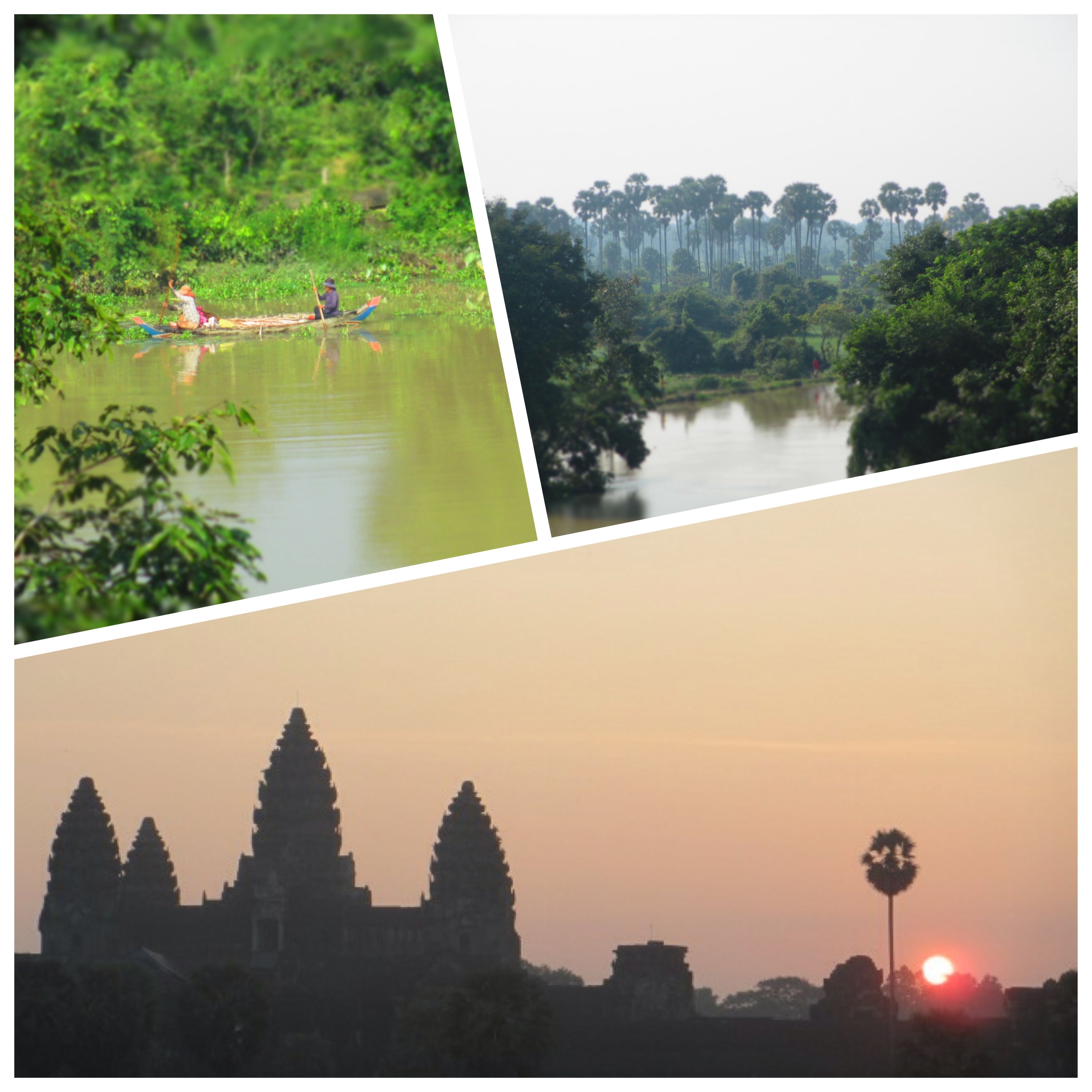
The transition from sedate, well ordered Japan to chaotic, lush Siem Reap was at first shocking. But Siem Reap makes it so easy. Tuk tuks, at $2-$3 a ride, are at your beckoning. Laundry is collected at the beginning of the day and returned cleaned and folded at the end for $6. Fragrant bright flowers coexist with mud and garbage. Khmer food rich with garlic, ground peanuts and lemongrass available on all corners. Whereas in Japan, we had to work hard for the basics, here it was laid in front of us.
image

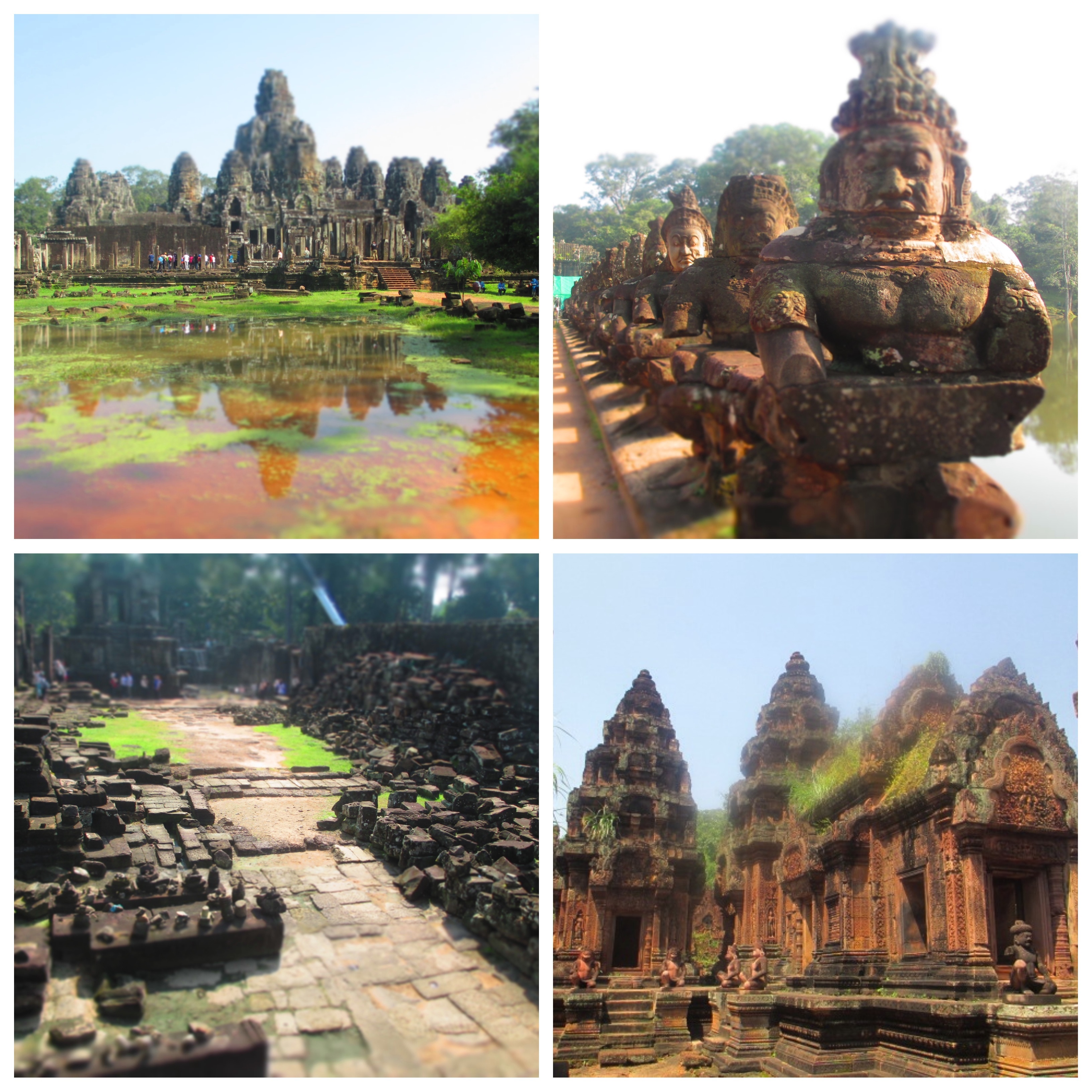
And the temples. There are few words to describe the Indian influenced Buddhist and Hindu temples. We saw so many beautiful temples in Japan, so why did the temples of Siem Reap leave us in such awe? Perhaps it was the interlacing of majestic with decay. Maybe it was the glow of the light. Or the richness of the sandstone against a pungent jungle backdrop.

image

In the end, we left Siem Reap not ready to go and craving more of its indulgent, sultry grit.

Sleep:

We stayed at the Golden Mango Inn at $35 night for a family room. The room left a bit to be desired however we’d stay there again. The hotel was clean, staff friendly, grounds provided a lush hangout area and, best of all, they have a sweet pool.

Eat: 

We enjoyed the Khmer food. Admittedly we were not too adventurous…no forays to the night markets for $1 dinners. Of the restaurants we frequented, we’d recommend Chanrey Tree, Mie Cafe and Sister Srey.

Do:

Beyond exploring the temples on our own, we also spent a day tour with Grasshopper cycling tours. I highly recommend this outfit. Our guide, Sam, was informative about the temples and the ability to travel alone on a mountain bike in the jungle as we cycled from temple to temple was liberating.

We also recommend the Landmine Museum.  While Landmine education is the focus, there is significant history regarding the Vietnam War and the impact on Cambodia.  It was educational for all of us and the kids are starting to realize the reach of the country we call our own.
image

Ugly Travelers

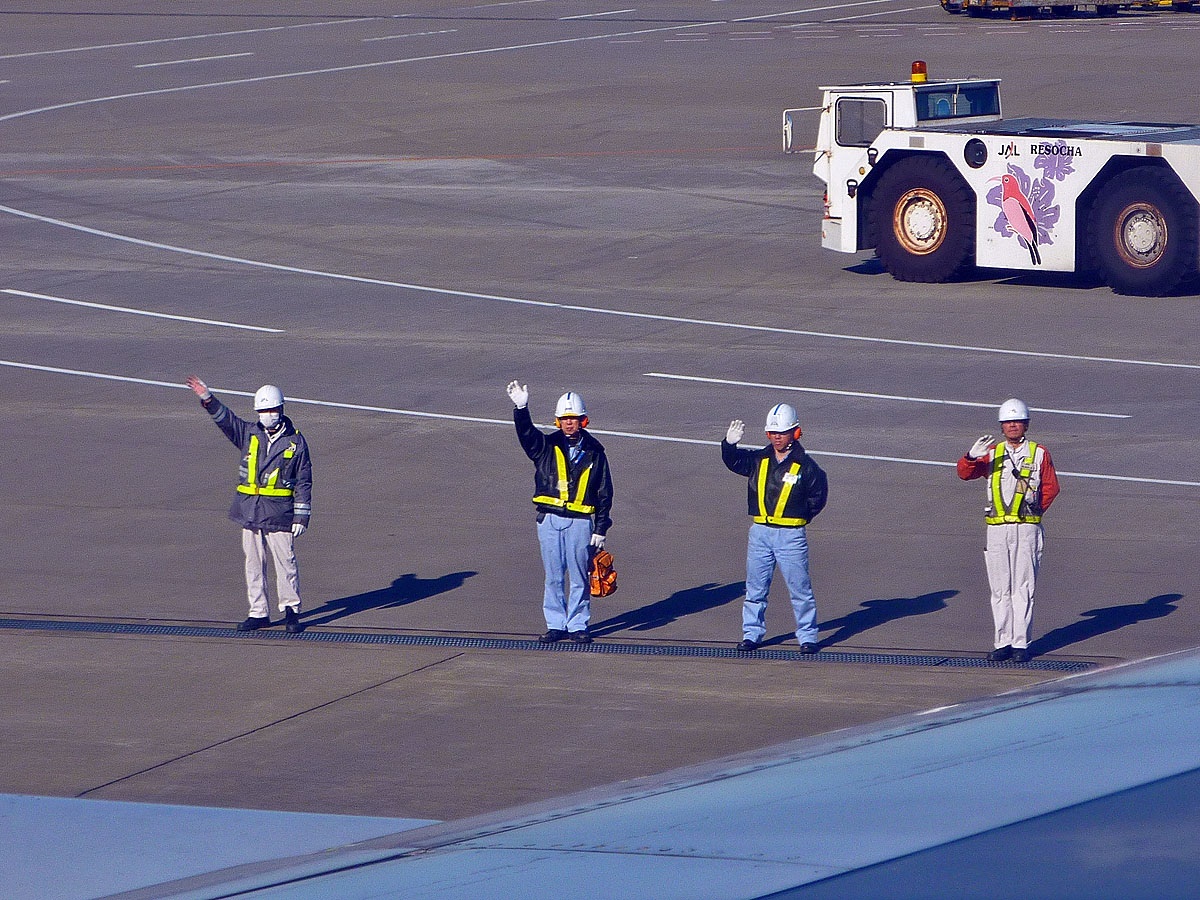
Our last image of Japan was the ground crew, standing at attention as our plane pulled away from the gate, waving goodbye in unison. It was another perfect example of the Japanese courtesy, respect and ritual we’d come to appreciate so much.

It was also the last courteous behavior we’d witness that day.

image

My household loves The Amazing Race. And there is always a team or two that seem on the verge of self-destruction because of their sharp, disrespectful talk to each other. We’ve rolled our eyes at those teams, been annoyed by them and silently hoped their demise was imminent. Well, this travel day…we became that team.

Our path was Tokyo to Siem Reap via a connecting flight in Shanghai. I was elated when I found cheap flights to Cambodia — the day after booking China Eastern Airline, an article came out stating it was #2 in the world for worst on time record.

So we were mentally prepared for delays and even entertained a nights sleep in the Shanghai airport. Bring it on.

We kicked off the trip with a four hour delay at Narita. No problem. When we arrived in Shanghai, we raced through the airport in an effort to make our connection. There were formal stops along the way in which serious looking Chinese airport officials in military-like uniforms looked at our paperwork and grunted humorlessly at us. It was clear we were not in Japan anymore.

We made it to our gate in time, sweaty but elated and quickly realized the flight to Siem Reap was also delayed. We first scoffed at the claim of bad weather but a nearby TV showed newsreel of a typhoon that had passed through and flooded the area. We settled in, still winning at mind over matter, playing UNO and judging those around us…a foursome of Russian men lumbering loudly, a pair of older European women in a huff about English language inability of the Chinese airline clerk. WE weren’t ugly travelers.

Our flight took off after a four hour delay, and somewhere in the skies between Shanghai and Siem Reap, my family turned. The kids became electronic game junkies, eyes glazed over, barking at each other loudly despite much of the cabin trying to sleep. I hit my no sleep wall and clambered away from my responsibility of shushing the kids to an open bank of seats to give in to rest. Seemingly every minute a chorus of “mom, mom, mom” combined with poking fingers would wake me up with some trivial need. At some point, the cup runneth over and we all combusted…sharp tongues delivering harsh words resulting in loud tears. The two European women who we had judged earlier sat across from us now able to return the favor.

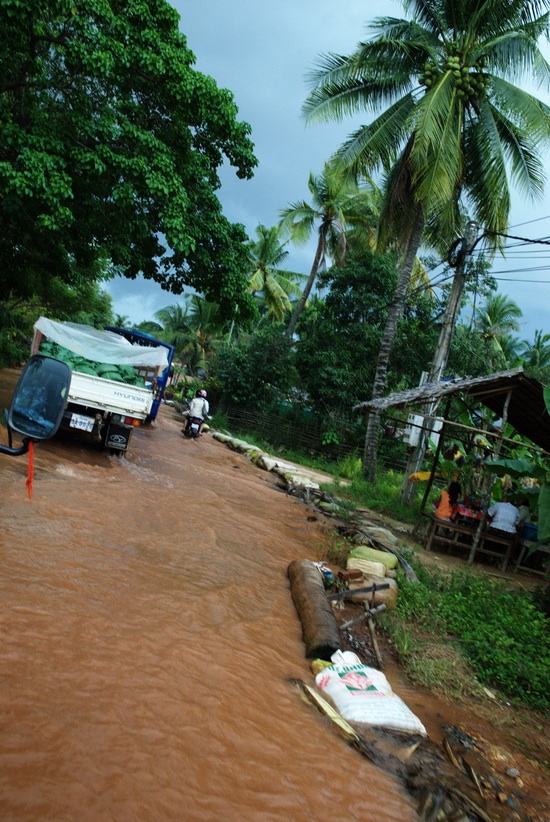
We landed in a flooded Siem Reap at 2AM. There were no taxis – they could not reach the airport. The airport itself was shutting down and we were pointed to outside damp benches that could serve as beds until morning. Kyle and I tried to be philosophical about it…this experience would help harden our kids, make them tougher. Then I pulled out my iphone. I reached our guesthouse, the Golden Mango Inn, by phone and begged for help. There were no promises, the road to the airport was flooded.

image

Almost two hours later, trying to rest next to the now sobered Russians, I heard a voice in the distance say “Golden Mango” and I was up like a shot. And that is when we met Hou. He was drenched from head to toe and he was our tuk tuk driver. We clambered in, backpacks and all, and sped off to the hotel. The streets were flooded and muddy water sprayed our legs and our luggage as Hou navigated the scene.

Hou became not only our hero but our driver for the week.

Hou became not only our hero but our driver for the week.

And after such a long day, I looked at my family closely. Here we were, in our first tuk tuk ride ever, rain and wind and the promise of refuge setting our spirits straight again. Everyone was smiling…our ugly travelers faded. From misery to miracle at the speed of a tuk tuk.

Happy again in Hou's tuk tuk

Happy again in Hou’s tuk tuk

The Takayama Files

Takayama is a small city in the Japanese Alps and taking the train into the mountains felt like coming home. As Seattlites, we are mountain and water people and climbing up the alps next to a rushing river…we knew we were going to a special place.

There’s little in Takayama and that was perfect for us. The town was small enough for the kids to tool around on their own…either watching the koi in the river that flows through the town center or purchasing green tea ice cream in the Sanmachi historical district.

image

Sleep
We stayed at Hida Takayama Tomaru Guesthouse. The owner, Shingo, set up a bunk bed room as a family room. With six bunk beds in the room and only four of us, the space felt luxurious. Seriously. The guesthouse was small and quiet and we’d recommend it. Shingo and his wife have a lovely two year old son and it was nice to interact with a toddler. The location of the guesthouse was perfect…2 mins from the train station and walking distance to all attractions.

Sights
With five nights in Takayama, we actually did very little but wander and roam and rest. We wore our fleeces for the first time in the trip, which felt worth while since they likely won’t see light again until December in Germany.

  • Kamikoche: I’m glad we experienced Kamikoche, a national park 90 minutes from Takayama. Now, let the record show that I am a hiking snob. I expect a challenging incline vs a pleasant path, and a good hike to me is one completed without seeing another soul. What’s cool about Japan is the love for the outdoors, particularly among the senior set. What’s not cool about Japan is most outdoor places will have hordes of seniors with walking sticks, backpacks and bear bells blocking the path in front of you. Now, granted, we were not in remote parts of Japan, so I’m sure there’s my kind of hiking heaven somewhere. Kamikoche was a very nice long walk in a beautiful setting (and at least this national park was open!).
  • Higashiyama Temple Walk: I believe there are 15 temples along the temple walk. The path is set up on a hill from the town and the views of the mountains beyond are quite lovely. I first did the temple walk as an early morning run and was the only person in sight…perfect. However I did not run there again as I felt some might be offended by my Japanese purchased size-large-but-still-too-tight-running-shorts in a place of worship. Later in the week, the family did an evening walk — it was lovely. Wish I had taken time to meditate there.
  • Library: The Takayama library has a few shelves of English books. The kids hit pay dirt with a series of Peanuts cartoon books and I learned about the art of Furoshiki, Japanese present wrapping.
  • Cycling Tour: We took a fun bike tour with Hida Satoyama Cycling through the neighboring town of Furukawa, learning about rice and buckwheat fields, fisheries and cattle along the way. I highly recommend this tour company. Our tour guide was originally from Tokyo, working himself to the bone, when he up and quit and moved to the country. He had recently purchased an old traditional home with the intent of restoring it. His enthusiasm and love for his adopted town and the architecture and environment in it was catching.
  • Morning Markets: There are two small but sweet morning markets in Takayama…walking distance from each other. The kids enjoyed strolling through them in the morning on the way to visit the koi.

image

Eat

By now we’d been in Japan four weeks so I think you’d forgive us for eating tacos and hamburgers in Takayma. In fact the two highest rated restaurants on TripAdvisor for the town are Chapala and Center for Hamburger. Chapala was over rated but that didn’t stop us from going…twice. Center for Hamburger was the best burger I’d had in a long time and I don’t know why we didn’t go twice!

Once we met our American needs, we turned to the traditional food of Hida Takayama, beef. We had a delicious grilled beef dinner (my apologies to my mother and any other vegetarians). But the best meal was Kyle and my happy hour. The kids were wandering on their own, and Kyle and I had a sake tasting and then sampled simple and delicious Hida beef skewers from each street stand we encountered. As we sat perched by the river with our happy hour faire, Japanese tourists took pictures of us, exotic birds that we were.

We truly loved Takayama and if we were settling in longer in Japan, we’d plant our roots there.

The Kanazawa Files

Kanazawa is a small city on the west coast of Japan. It was spared from bombing in WWII and its architecture remains intact. Small, captivating canals meander through the walkable city. After navigating Tokyo and Kyoto, it was nice to be in a small, manageable city.

image

Sleep

The highlight of our trip was our stay at Pongyi Guesthouse. Read about it here and you’ll see why: https://greenleycoffeebreak.com/2013/10/02/can-a-44-year-old-stay-in-a-youth-hostel/

Sights

Our Favorite Activities in Kanazawa:

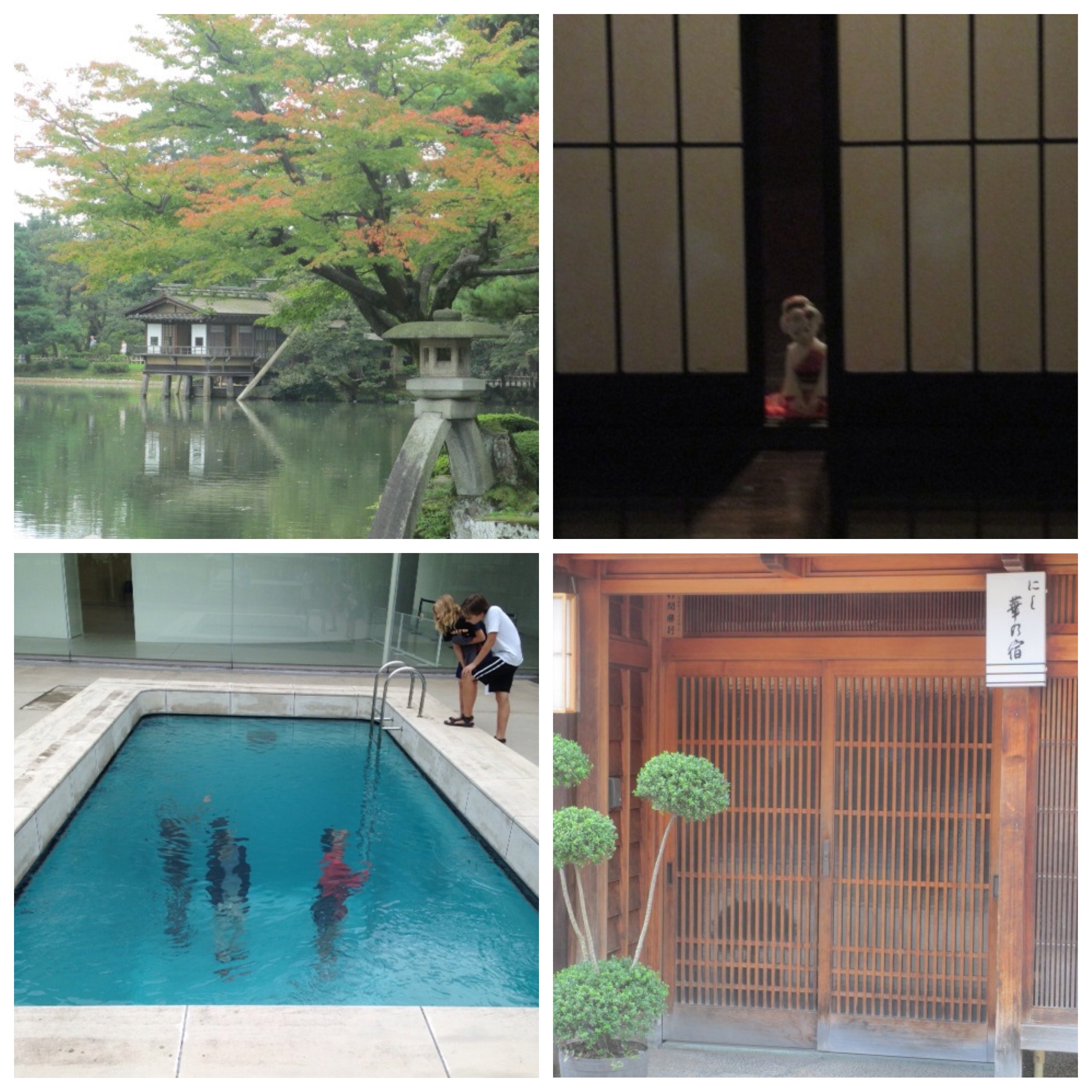
  • Oyama Shrine: While not spectacular, we loved the humbleness of this shrine. It is set in a slightly overgrown garden and so approachable. We had found that some well manicured gardens in Japan are to admire from afar, e.g. an inviting bridge that you are not allowed to cross. But the Oyama Shrine garden allowed for a game of frisbee and uno as we sat and watched the koi swim by. The shrine is known for its stained glass, rare in Japanese shines.
  • Kanazawa Castle: The Castle is a woodworkers dream. Recently rebuilt and completely empty except for…wood! Multiple displays regarding the joinery and building method. Needless to say, Kyle was in heaven.
  • Children’s Library: Yes, really! This was a lovely space to knock out homeschooling….bright and light with many corners to dig into math and writing.
  • Kenrouken Garden: Called one of the three best gardens in Japan, Kenrouken was sprawling and beautiful. We saw it following the shrine and castle so the garden didn’t get the full meandering attention from us that it required. A gorgeous must see.
  • Ninjadera: This is a shogun house that has many “ninja” features including trap doors and false walls. We all enjoyed it very much…feels much more historical than Hollywood. The tour must be reserved in advance and is in Japanese. There is a comprehensive English guide to use during the tour. Young or restless kids are not allowed…we sedated ours before entering (kidding…we just got lucky, they were well behaved that day!).
  • 21st Century Art Museum: HIGHLIGHT. I was blown away by this museum. It’s known for a swimming pool exhibit in which people standing under the pool appear to be in the pool water. But there was so much more! I was entranced by the In-Habit Project exhibit by Isabel and Alfredo Aquilizan. Thousands of reused cardboard boxes built into a sprawling community meant to represent a floating village off the coast of Borneo.
  • Nagamachi: Beautiful traditional home in the Samurai district with the sweetest garden. We encountered a group of touring Japanese men who clearly had a bit too much to drink. One asked Sean to sit and participate in a team ceremony. I watched like a hawk while Sean sat cross legged, sipping his tea and conversing quite comfortably.
  • Confectionary: On our last day in Kanazawa, we sat with a friend from our guesthouse and dozens of middle aged Japanese ladies learning how to make rice based confections from a master chef. It’s such an art form, its hard to imagine even eating these beauties. Our resulting product however…
  • Omicho Market: I loved this market…it was 99% authentic…vegetables and seafood. The largest snow crabs I’ve ever seen, so many fresh vegetables (I ate more salads in Kanazawa than anywhere else). The kids and I had our first taste of a nashi there, a yummy fruit reminiscent of a pear-apple, or as Sean named it, a papple.
  • Woodworking: Kyle spent time in Kanazawa in local woodworking shops, seeing the local methods, perusing the tools and making future contacts. He had a few serendipitous moments that will certainly influence his work back home.

image

Eat

Sushi, Sashimi, Sake…oh my! The freshest seafood and an increasing understanding of sake led to some yummy meals in Kanzawa and some failures…pointing to a picture of a fish netted me a fish head. We also tried out first conveyor belt sushi restaurant, which was tastier and more economical than U.S. versions.

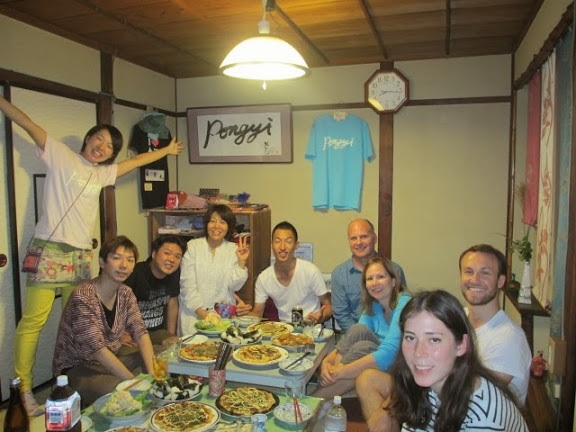
But our best meal with the one we made and ate side by side with our hosts at Pongyi Guesthouse…sagayaki and the best of company.

image

The Kyoto Files

We leave Japan for Cambodia in three days. Our five plus weeks here have flown and we’ve found our family travel rhythm.

Before a philosophical post on what Japan has meant to us, we owe you a trip report for Kyoto, Kanazawa, Takayama and Tsumago. So I am in catch up mode…first, Kyoto. Again, this is simply a quick list of what we did, where we stayed, yadda, yadda, yadda…vs well worded writing.

Sleep

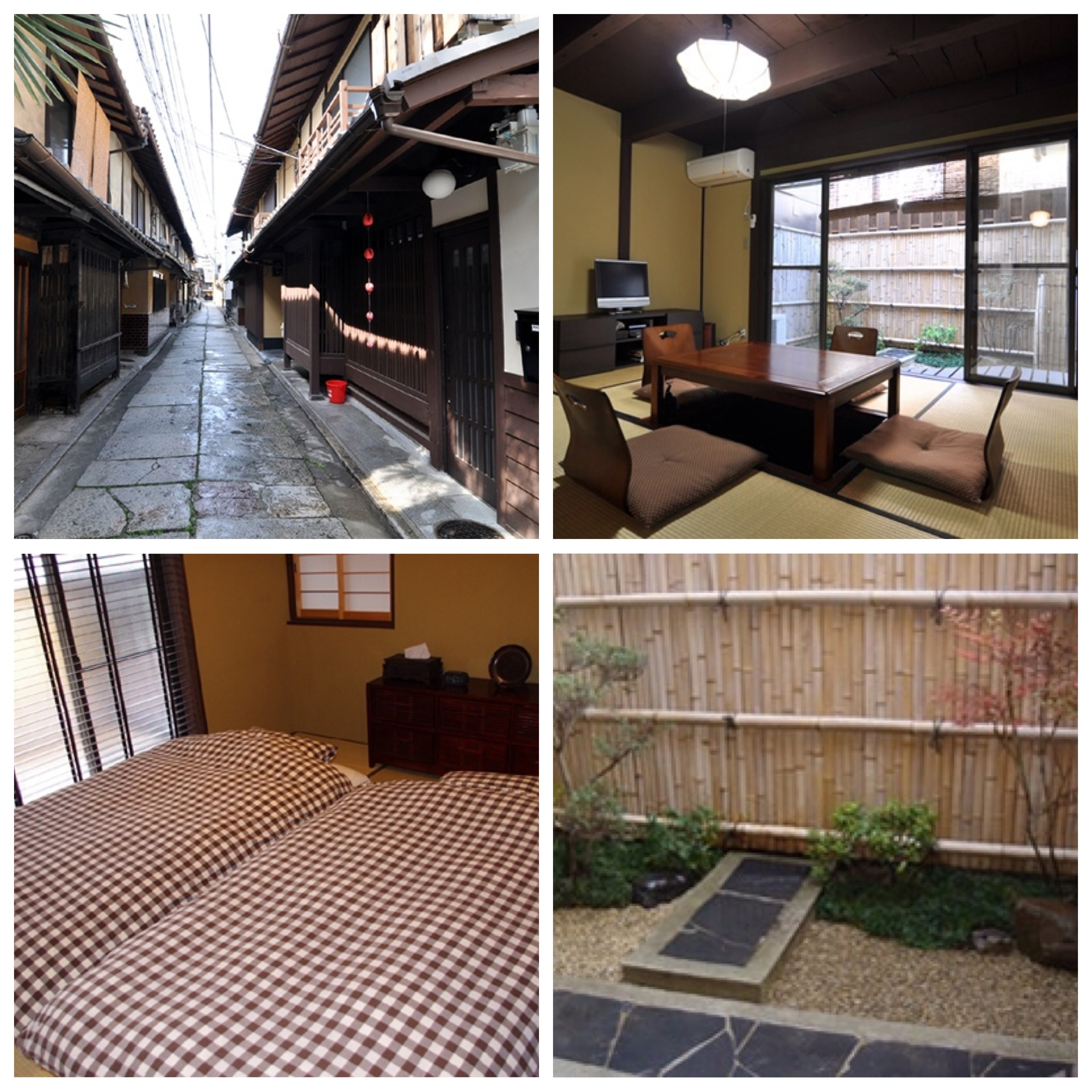
This was one of two decadent stays in Japan…we booked a traditional Machiya home for two weeks. We felt lucky to live in this historic alleyway, hearing the coming and goings of neighbors (we sure know they heard us!). A real treasure and one of our favorite accommodations in Japan.

http://www.maeniiya.com/

image

Sights

Kyoto was much larger than we anticipated and while we were there for a full two weeks, there’s far too much to see if we were to stick to our homeschool schedule. So here’s what we made time for, highs and lows:

All Time Favorite Day: Arashiyama

I did an earlier post on this so I won’t go into detail here however we so loved this small town bordering Kyoto…quiet unique temples, bamboo forests and an entertaining monkey park…what else do you need?

Temples

There are over 2,000 temples and shrines in Kyoto (Temples are Buddhist, Shrines are Shinto). Here were our favorites:

  • Kiyomizudura Temple: This decadent temple comes with a pagoda, walking paths, and a fancy-pants water purification fountain. While extremely busy with tourists, it was stunning and the neighborhood it sits in also beautiful.
  • Fushimi Inari Shrine: Over 1,000 orange Torii gates follow a meandering walking path up into the mountains. Stunning. Calming. Sacred.
  • Sanjusangendo Temple: The hall of this temple houses 1,000 life-sized armed Kannon statues. It is an amazing sight to behold. The detail in each Kannon is unique. You are not allowed to take pictures inside the hall so the photo below is swiped from google images.
  • Heian Shrine: We really appreciated the large garden attached to this shrine. We meandered for over a hour, taking time to feed the koi and snapping turtles in the most picturesque place.
  • Adashino Nenbutsuji Temple: Our 2nd most favorite temple…it had hundreds of stone statues amid bamboo trees and was heavenly quiet and sweet.
  • Otagi Nenbutsuji Temple: Our favorite!  Thousands of Buddhist disciple statues carved in stone hugging a hillside. Serious, humorous, loving…every face imaginable. Think of complete solitude and hours to explore every face before you.  Such joy.

image

Cultural Experiences

  • International Manga Museum: While most exhibits are in Japanese, there is a collection of English Manga and a great space to read, which gave the kids hours of entertainment.
  • Nijo Castle: Beautiful grounds, intricate details and a moat…what else does one need? The photos below are of Nijo…loved this place!
  • Sake Museum: Kyle spent an afternoon learning the nuances of Japan’s adult beverage.  The tour came with samples…of course.
  • Harvest Moon Festival: We were lucky to be in Kyoto during the harvest moon (mid-September).  A handful of temples held evening celebrations with traditional music, dance and food. We partook in all of the above!
  • Handicraft Center: I highly recommend this place if you have kids or enjoy learning local art. They offer approx. eight handicrafts for a nominal fee.  Kyle and I tried our hand at wood block art, Sean made a paper toy top and Julia made a glass necklace…very fun afternoon!
  • Kimono Fashion Show: Ok, my family thought this was cheesy but I loved the Textile Center’s kimono fashion show.  It runs multiple times a day.  I had a smile in my face the whole time but admittedly I am fabric obsessed.

image

Eat 

We struggled a bit with food in Kyoto. With a kitchen, we thought we’d be cooking more but our trips to the grocery store were comical and fruitless. We’d find online a restaurant we’d want to try, take multiple buses to get there and be turned away at the door (we are so uncool). Nevertheless, we had two standout food experiences in Kyoto:

  • Ipuddo Ramen: In the Nishiki market..let me just say this…any restaurant who provides patrons with their own garlic press is A-OK in my book.
  • Tsukihi: This central Kyoto restaurant was in our neighborhood and we stumbled in on a date night. No one spoke English but they were very welcoming. I managed to communicate that our server should chose on our behalf.  Right choice!  In hindsight, we figured out that the restaurant specialized in farm fresh food.  We were sorely lacking vegetables in our Japanese diet thus far and we spent the evening moaning in delight at the taste of fresh vegetables and fish.  Highly recommended!
Ippudo's Ramen

Ippudo’s Ramen

Tsukihi Perfection

Tsukihi Perfection

What I was Supposed to Love that I Didn’t

  • Gion: Oh, Gion, what have we done to you? You were supposed to be a picturesque, quaint vision of old Kyoto with the stolen sight of a geisha here and there. But I could hardly see you through the hordes of  tourists — we’re sorry to have contributed to your chaos.
  • Nishiki Market: When a shopkeeper has to post signs in English asking one to NOT take photos of unique vegetables or fish, the magic is gone. Another sweet spot overrun by tourists (and yes, I’m aware of the irony here).

Tips

Activity Bookings: Kyoto is a popular tourism city. We found we should have booked activities well in advance. For example, we wanted to take a cooking class and they were all reserved. Also, many sites require a phone call reservation, which can be difficult if you don’t speak Japanese…planning that well in advance assures both room and support.

Volunteer Tours: There are a handful of organizations that provide complimentary tours in Kyoto. We used Samaritan Students, which are local university students, and it was a highlight of our trip. This is a must. It’s so easy as a traveler to superficially interact with the locals. Tours like this allow for deeper conversation which was very rewarding. It is normal to pay for transportation, temple fees and lunch for the guide.

Run to the Border: Kyoto was surprisingly big and the center was very commercialized. The Kyoto you hear about…quaint, green, calm is found at the edges of the town…Arashiyama in the northwest, Kibune in the north, Fushimi in the south, and so on.

Stay tuned for trip reports on Kanazawa, Tsumago and our absolute favorite place in Japan thus far, Takayama (it’s even fun to say)!

An Eleven Year Old’s Guilt

What do you say to your child when you ask her what her primary feeling was after a visit to Hiroshima and she looks at you with tears in her eyes and says, “Guilt.”

Born 57 years after atom bombs were dropped on Hiroshima and Nagasaki, and an eleven year old carries the guilt of an act that killed approximately 140,000 people.

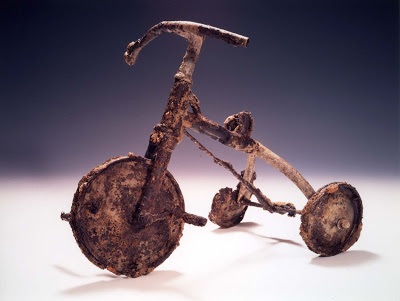
This tricycle was initially buried with the three year old child riding it when the bomb dropped.

This tricycle was initially buried with the three year old child riding it when the bomb dropped.

War strategy is chilling.  I won’t stand on a pulpit and declare it unnecessary.  But we all know the cost of black and white conversation is invariably not military assets, but civilians.

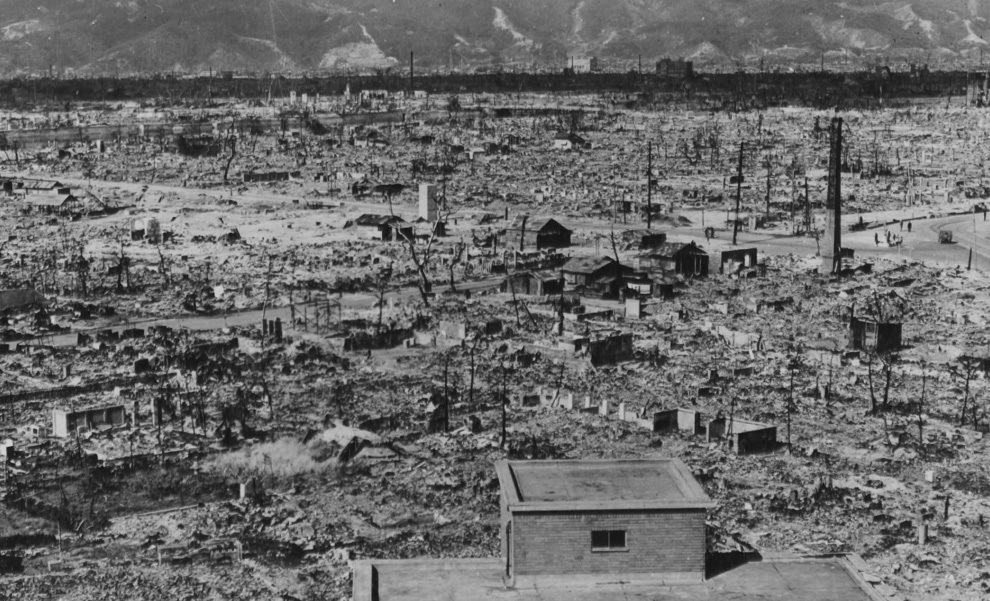
Hiroshima Before

Hiroshima Before

And after...

And after…

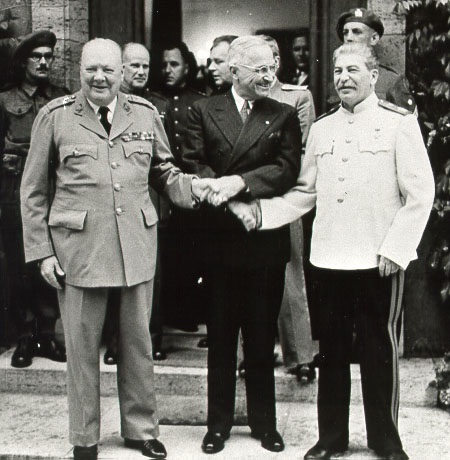
The Memorial Peace Museum was remarkably balanced in its representation of Japan’s war history, the events that led up to the bombing of Pearl Harbor and the subsequent response of the United States.  Reading Stephen Walker’s “Shockwave” prior to our visit enlightened us to the complexity and, frankly, deceit, between allies with the bomb not only being a method to stop the war but a message to an ever strengthening Stalin about American power.

Churchill, Truman, Stalin

Churchill, Truman, Stalin

Certainly the vividly graphic review of the day the bomb was dropped and the subsequent impact was terrifying.  But this was expected.  Honestly, I was most struck by the hundreds of letters of protest since written by Hiroshima’s and Nagasaki’s mayors to the heads of state of the United States, Russia, China, UK and France whenever those countries have performed a nuclear test.  You’d think as someone who grew up with atom bomb drills in school (who were they kidding?) and attended no nukes protests, I would be a bit more in tune with the state of nuclear weaponry today.  I hadn’t expected to see letters from this calendar year to President Barack Obama…there were four.

Atom Bomb Dome

Atom Bomb Dome

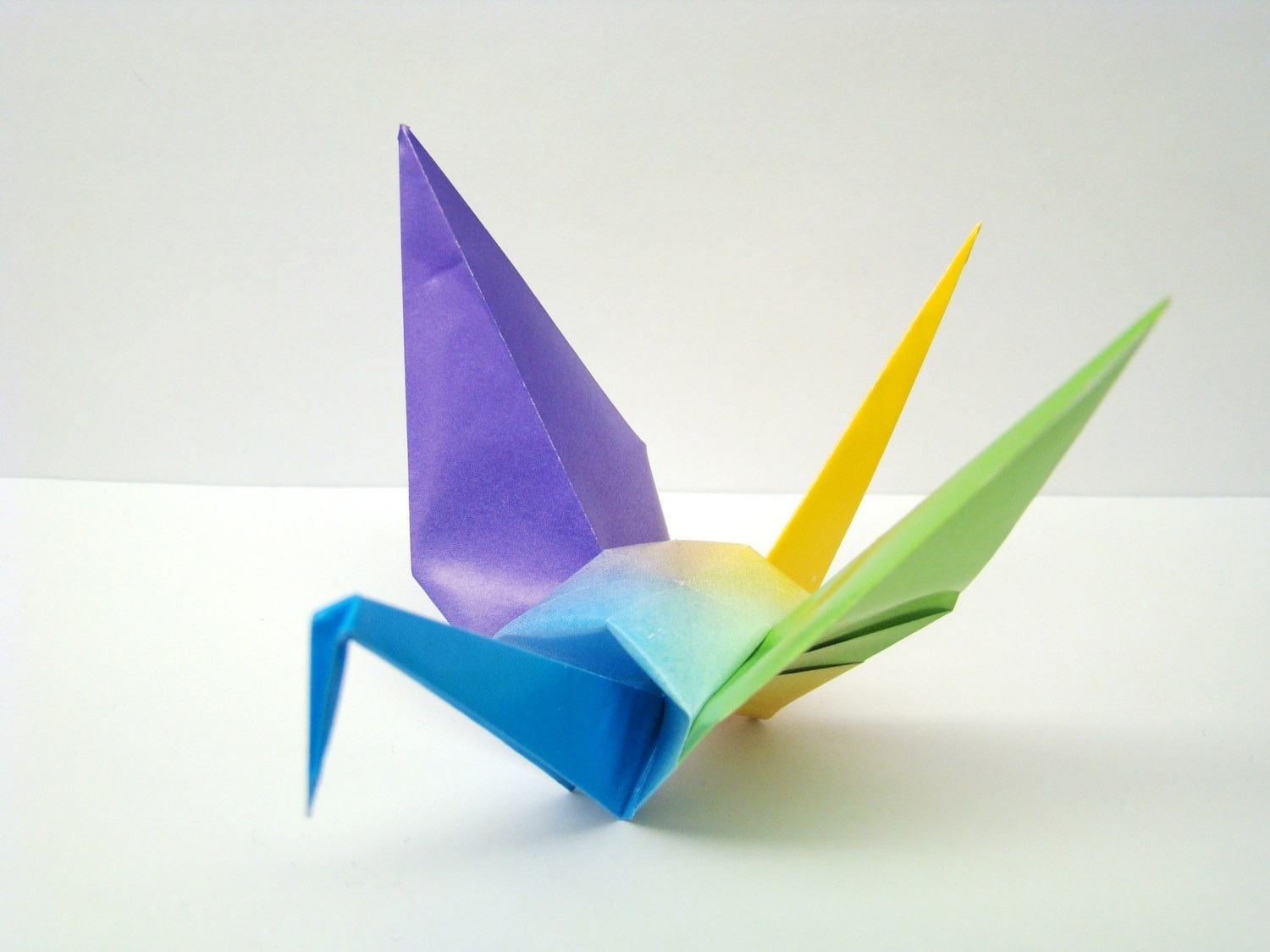
I led the kids to the museum shop, purchased origami paper and we sat side by side as I showed them how to fold a peace crane.  I explained that war is complex, that there are actually rules about how countries can fight a war, but that in the heat of fear and emotion and death, rules are oft forgotten (and perhaps absurd).

We discussed the concept of nuclear deterrence, the controversy of U.S.-led drone strikes, Syria’s chemical weapons…and whether there can be fair and just wars.  We did not come to a conclusion but we agreed that what happened in Hiroshima and Nagosaki should never happen again.

image

Can a 44 Year Old Stay in a Youth Hostel?

Remarkably, yes!

I can hear my kids saying “mom, it wasn’t a youth hostel, it was a guesthouse.”

Bunk beds?  Check!
Shared bathroom?  Check!
Guests under 25 with backpacks?  Check!

Close enough.

We value our privacy in a big way.  I wondered how we would manage shared space for a week.  However we also knew that staying in a guesthouse would give us more visibility into Japanese culture than we’d ever learn on our own.  And frankly, accommodations in Japan are pricey and our six nights at Kanazawa’s Pongyi guesthouse would help us right size our budget.
Snapshots:

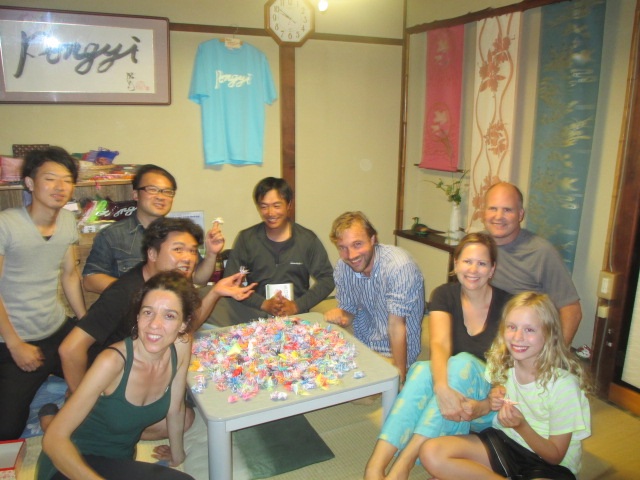
Sitting on the floor on thin cushions with guests from Singapore, Australia, Germany and Japan making paper cranes to take to a local shrine.

1,000 Cranes!

1,000 Cranes!

Gathered around for a Pocky (chocolate covered bread sticks) party with Pocky of all types…green tea Pocky anyone?  Followed by a puppet show about the history of Kanazawa.

Pocky Party!

Pocky Party!

Num num

Num num

A guest from Tokyo exclaiming “it’s my holiday!” and grabbing a beer to have with his breakfast shortly before he went to the kitchen and whipped up an unexpected breakfast for us of noodles, eggs and green onions…it was delicious!  The same man caught us headed to bed for the evening…in our hands, just used toothbrushes and toothpaste.  In his hands, a bottle of sake and three sake glasses insisting on toasting our visit to Japan.  How could we refuse?  The next day he showed up with bags of must try Japanese candy for the children.

Our last evening, our host planned a Japanese menu that catered to our tastes (beef for Kyle, leeks for me, and fried chicken for the kids), took us shopping and showed us how to cook sukiyaki, a beef and vegetable dish.  Sean and Julia set the table for nine and we sat down with guests from Singapore, Japan and France for a feast.  As we ate, we learned more about each others cultures and our fondness for the Pongyi Guesthouse and its wonderfully warm and entertaining hosts, You and Maru, grew and grew.

You & Maru from Pongyi

You & Maru from Pongyi

Were there a few uncomfortable bathroom moments, shower waits, and slightly obnoxious guests?  Yes, of course.  But our level of understanding of the Japanese cultures accelerated during our week in Kanazawa.  And lord did we have fun!  It’s interesting to think that had our budget allowed, we would have stayed in a nice hotel with a private bathroom…quietly and sadly alone.

The Japanese Blues

A different kind of shrine

A different kind of shrine

Our last night in Kyoto, Kyle and I perused our neighborhood for a date night local. I’d had my eye on a tiny Tapas bar but we were turned away at the door. This has happened a few times in our three weeks here…a claim that there’s no room for us when clearly there is. We weren’t offended by it — while disappointing, we understood a proprietors desire to hold some places in Kyoto gaijin-free.

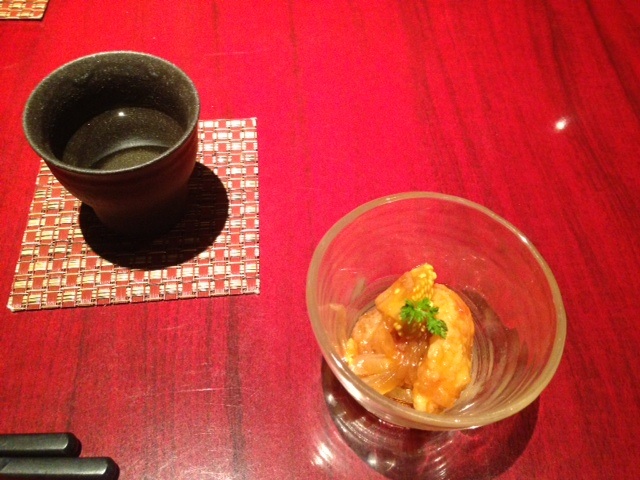
Trying again, we were enthusiastically welcomed into a small sashimi restaurant where my mouth wrestled with a hunk of octopus far too big and chewy to conquer. And Kyle’s Iowa blood craved steak and potatoes in a way that raw fish would never satisfy so we simply accepted that our last Kyoto meal would lack substance but was good company.

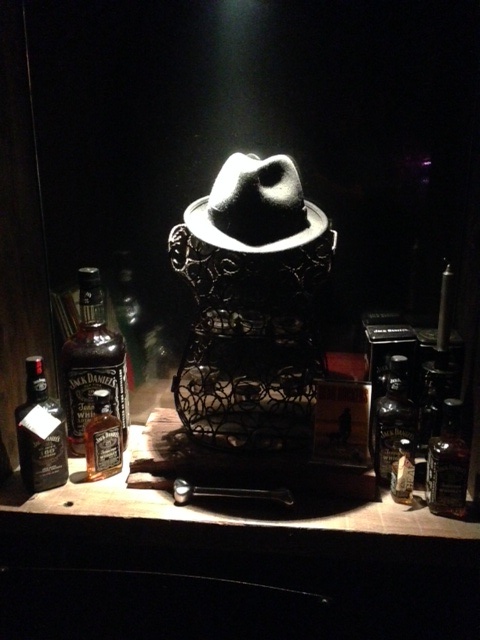
Leaving, we noticed a discreet alleyway across from us, with a carved ice block of Jack Daniels (steadily melting) and peered in. And this is how we stumbled across a Japanese blues bar.

Gear Bar...wish I had taken the photo at night!

Gear Bar…wish I had taken the photo at night!

The bar, Gear, was so small that as patrons arrived for the show, additional stools were brought out, and people shifted mere centimeters to make room. With twenty people jammed into the slowly smoke filling space, we waited for the show. My money was on the bartender picking up a guitar — with his fedora, wild black hair and craggy face, he looked to be a Japanese Keith Richards. We spoke with the perplexingly mixed clientele squeezed in around us, learning small facts despite the language barrier.

image

Two young women took the stage wearing shift dresses, pearls and pumps. We were confused. Opening act or bank tellers? Then they opened their mouths. Deep throaty classic blues…Buddy Guy, Muddy Waters…coming to us in part English, part Japanese. Head bobbing gold.

The Blues Sisters played two sets and three ovations and we squinted through the smoke, smiled at our seat mates, moved to the music and were grateful for serendipity.

The Blues Sisters

The Blues Sisters

At the end of the show, our neighbors shook hands with us and the Blues Sisters graciously thanked us with multiple “arigatou gazaimasu” and head bows as we purchased their CD. We spilled from the tiny space into the night on a high.

This was our first time in Japan that we felt entry underneath the cloak of a private culture…a cloak we’d sewed from our own stereotypes, for sure, but difficult to truly see beneath without individual interactions. Here’s to more serendipitous moments for all!

“I’d love to hear that sweet Memphis song
and that good old funky rock n roll
oh when I need some healing
the only thing I turn to
all that makes me happy is the BLUES”

Buddy Guy – All That Makes Me Happy Is The Blues

Natural Disasters & The Oblivious Tourist

Our 1st week in Japan, we sat sipping coffee when the cafe began to sway. Kyle and I looked at each other. We have quite an earthquake history between us — Seattle, Northridge, Mexico City. He said, “It’s an earthquake.” I said, “Nah, the metro tracks are right there, it’s a train.”

He was right.

There was no panic in the cafe. Japan, sitting on the pacific ring of fire, sees over 1,500 earthquakes a year and judging by the calm with coffee, the country’s citizens are used to them.

We felt one more earthquake before leaving Tokyo. A day at the Museum of Emerging Science confirmed both. We packed up, headed to Kyoto and…walked into a typhoon.

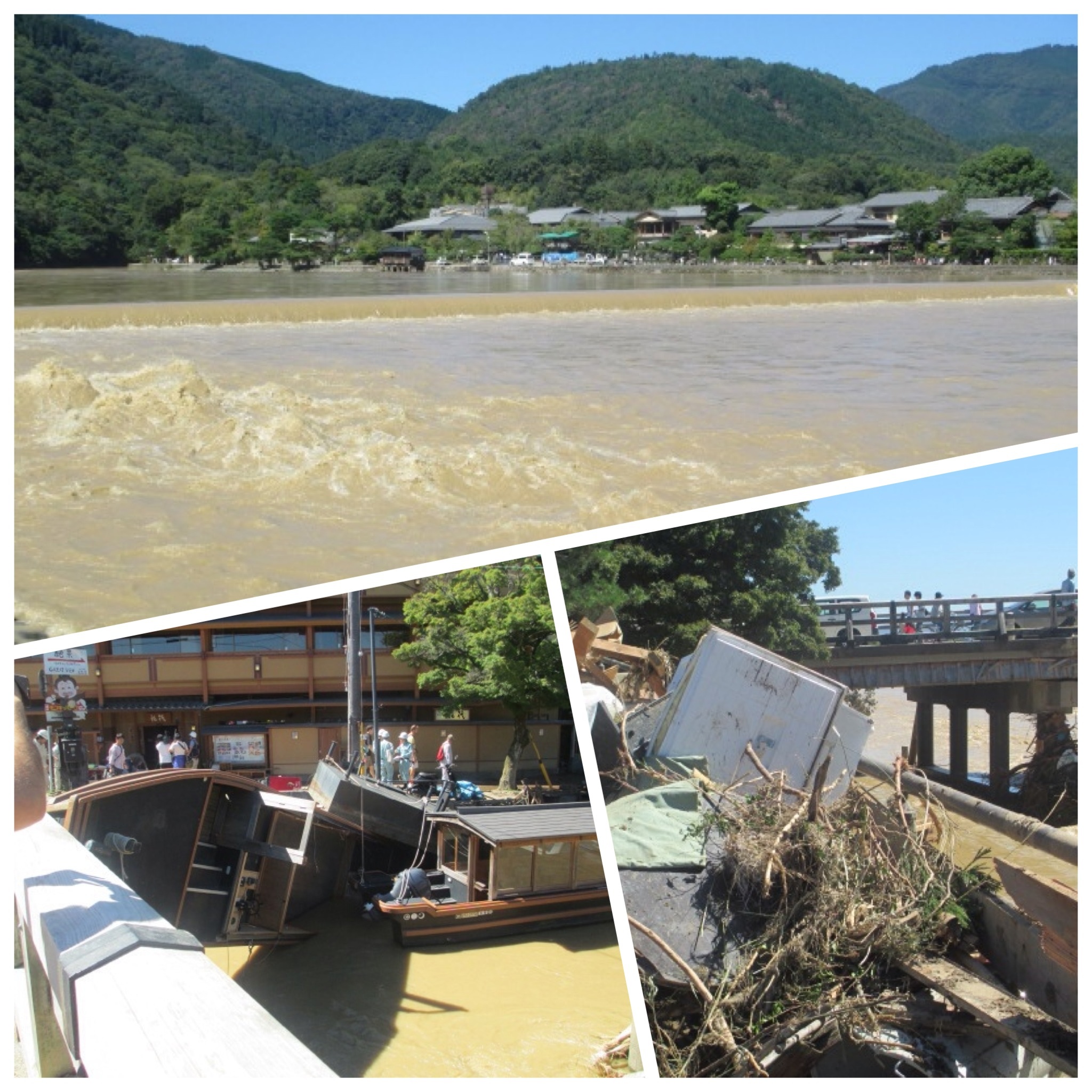
Kyoto Typhoon (photo by Nobora Tomura)

Kyoto Typhoon (photo by Nobora Tomura)

As tourists, reality is often suspended. There’s the vacation protection bubble myth, that bodily harm couldn’t possibly happen in paradise. So the zipline company doesn’t provide helmets, so what? So the taxi has no seat belts, big deal!

Despite a sleepless night listening to house shuddering wind and rain. Despite my cellphone, now on Japanese wifi, shrieking hourly with emergency warnings (ok, in my defense, the alerts were in kanji, Japanese characters), I wasn’t concerned. When Kyle told me the next morning that he attributed the cellphone noise to neighbors ringing our doorbell trying to alert us, I at least wasn’t alone in my moronic choice of sleep over emergency response.

At some point, we actually read the news and were mortified to learn that over 250,000 people were evacuated not 15 minutes from us. But it was really this morning, when we made our way to Arashiyama, on the NE outskirts of Kyoto, that we realized we’d missed reality.

Our Photos 36 hours Post Typhoon

Our Photos 36 hours Post Typhoon

The Katsura River flooded, nearly submerging the historic Togetsukyo Bridge, and damaging the shops, restaurants and inns along the river. It’s slightly embarrassing now to admit that we had come to Arashiyama as giddy tourists to see the monkey park. Instead we saw a raging river, piles of debris, and flooded businesses with groups of people working hard to clean and recover.

Now a profound ending would be to say that we too jumped in, rolled up our sleeves and helped. We didn’t. We talked about it, assessed the situation (the press and military were on site) and determined we’d be a distraction vs a help.

Instead, we climbed small roads high above the river and visited a Buddhist temple, Otagi Nenbutsuji. There we were surrounded with 1200 rakan, stone statues representing Buddhist disciples. While built in the 8th century, the temple was hit with a…yes…typhoon in 1950 and had to be rebuilt. The rakans were thus carved in 1980s and 1990s by amateur artists. The temple brochure reads that “…the carvings have amusing or contented expressions that warm the hearts of visitors.” And that’s exactly what they did.

image

Here in our suspended reality, we’d come face to face with a surreal location that had been destroyed by natural disaster and rebuilt with calm and steady resolve. As we peered into the faces of each rakan, smiling at some, laughing aloud at others, it was clear to me what an exceptional culture we were experiencing.

So imagine our surprise when we saw among the many faces, the one person in our extended family who epitomizes calm, steady philosophical resolve, who is hard working and driven by “we” vs “me.”  And who certainly would have recognized a natural disaster just a wee bit quicker than we did.

Papa Greenley

Papa Greenley


The Tokyo Files

Just a quick list of what we did, where we stayed, yadda, yadda, yadda. Admittedly, I’m not nuts about itinerary recaps or maybe I’m just Trip Advisored out, but its helpful to others and boy do we owe paying it forward.

Sleep
We booked a small apartment on flipkey: http://www.flipkey.com/tokyo-condo-rentals/p226889/ This was not fancy by any stretch but adequate and good set up for a small family with 2 bedrooms & a small pullout couch. Plus a portable wifi, which is a saving grace when you think you know how to get where you’re going but really don’t! The apartment was 3 metro stops to Shibuya and we liked being in a quiet neighborhood vs the craziness of the tourist destinations.

Sights
Day 1: Meiji Shrine, Harajuku, Arcade Fun

Meiji Shrine Prayer Tablets

Meiji Shrine Prayer Tablets

Day 2: Museum of Emerging Technology & Science — wow, this is an impressive museum…great interactive learning for tweens and teens

Asimo Robot Demonstration

Asimo Robot Demonstration

Museum of Emerging Science

Museum of Emerging Science

Day 3: Chill day…went to see the lights of Shibuya at night

Shibuya

Shibuya

Day 4: Kamakura (see previous post)

Day 5: We took a tour with Backstreet Guides, http://www.thebackstreetguides.com, to be able to see more then we could manage on our own. It was a splurge but worth it. Our guide, Rei, was wonderful. We visited the Tsukiji fish market, Sensoji temple, Nakamise dori shopping street, the Sky Tree, Akihabara (electronics district and home of the bizarro maid cafes), and the old district of Yanaka. Along the way we sampled sushi (highlight!), went on a rickshaw ride and had a traditional soba noodle lunch.
Fish Market Sushi

Fish Market Sushi

Electronics District

Electronics District

Day 6: The boys caught up with football (go Seahawks!) while the girls checked out Shibuya 109,  9-stories of stores dedicated to the fashionable young lady (I stood out…and not in a good way…in my frumpy ex-officio outfit).

Shibuya 109 Purchase

Shibuya 109 Purchase

Day 7: Bullet train to Kyoto

Tips
Wifi / SIM Card: It’s best to arrange this at the airport when you arrive. I didn’t realize that and so we didn’t! Fortunately, I found http://www.Japan-wireless.com online — they deliver SIM cards and wireless routers for rental directly to your hotel. At the end of your trip, you pop the router into a prepaid envelope. Voila! So far its working great.

Tokyo was a great transition week. There were highs and lows as we adjusted but on the whole the city felt easy to navigate. We have many positive first impressions of the culture and the people — there’s a level of service, graciousness and respect that is rare in the U.S. That said, there is also an undercurrent of something else hard to put a finger on…perhaps a steadiness that lacks joy. It’s too soon for us to really comment and even when when we do, it will be from a meager five week perspective. We are simply grateful to be here.

Now it’s onward to Kyoto where homeschooling begins…a whole new adventure!